
2026-09-16 · Robert Ellis
How Clarksville Winter Freezes Lead to Skylight Leaks
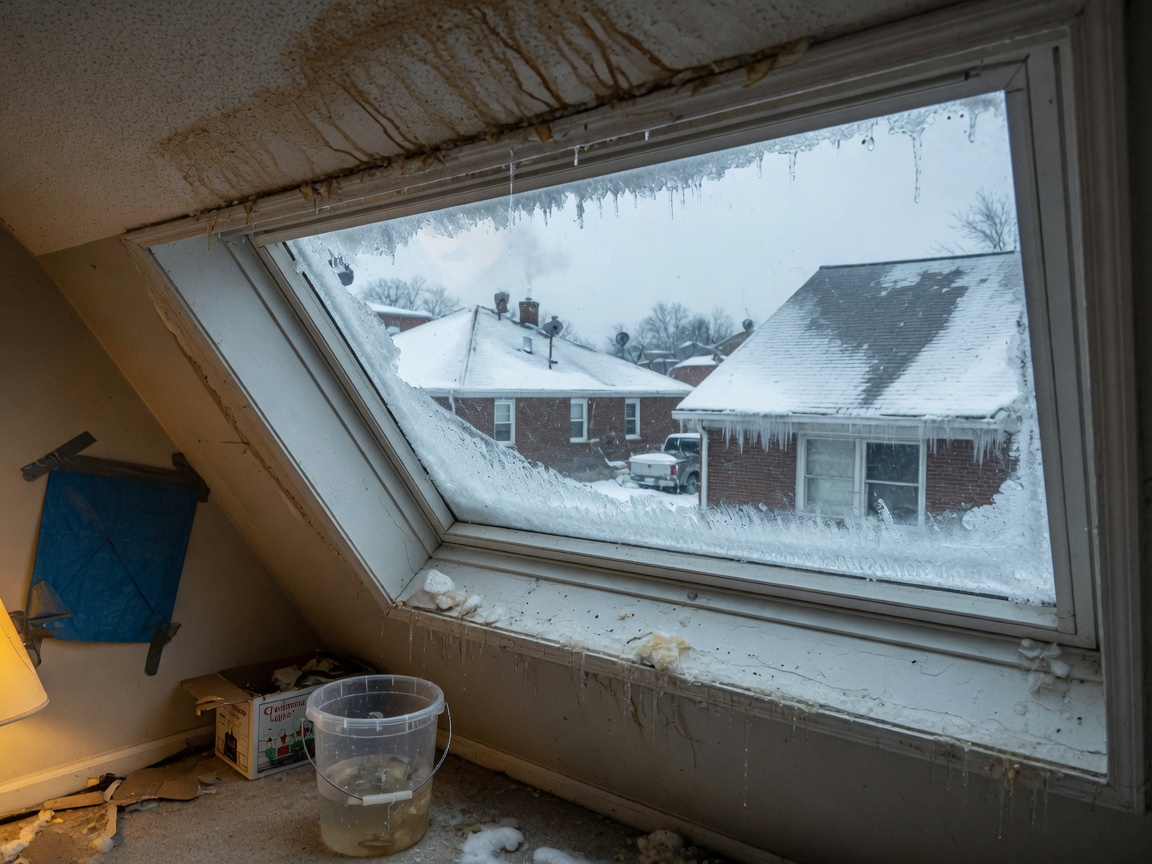
Clarksville winter freezes lead to skylight leaks when water trapped in seals and flashing expands into ice, widening gaps that allow meltwater inside once temperatures rise above freezing. This cycle repeats during the mild but fluctuating winters typical of Montgomery County, where overnight lows often dip low enough to freeze but daytime highs allow thawing.
Ice Expansion in Skylight Seals
In humid subtropical conditions, even brief freezes push water into the smallest openings around skylight glass and frames. The expansion of that water into ice can stretch or crack rubber gaskets and sealant beads, especially on homes built before modern weatherproofing standards became common in neighborhoods such as New Providence and Hilldale. Once the ice melts, the enlarged gaps let rain and snowmelt run under the glass. Skylights installed on south-facing roofs near the Cumberland River catch more solar gain during the day, speeding the thaw and increasing the volume of water that finds its way inside. Repeated freeze-thaw cycles over several winters gradually turn minor seepage into active drips that stain ceilings. Homeowners often notice the first signs after a string of nights below freezing followed by a warm front moving up from Nashville.
Flashing and Frame Damage in Local Housing Stock
Many homes in St. Bethlehem and around Fort Campbell date from the 1960s through 1980s and use older metal flashing that contracts and expands with temperature swings. When ice forms beneath the flashing, it can lift edges or crack soldered joints, creating channels that direct water into the roof deck. Wood-framed skylights common in Sango ranch houses absorb moisture during these events and begin to rot at the corners. The mild winters mean the damage accumulates slowly rather than from a single hard freeze, so leaks may not appear until spring rains arrive. Checking flashing condition after any stretch of sub-freezing nights helps catch problems before they reach interior finishes.
Thaw Cycles and Water Intrusion Patterns
Clarksville's location between Nashville and Hopkinsville produces rapid temperature swings that turn one night's ice into the next day's running water. Meltwater follows the path of least resistance, often traveling several feet along roof sheathing before dripping through a ceiling. In older Downtown Clarksville properties with low-slope sections around skylights, standing water can remain long enough to saturate insulation. The same pattern appears on two-story homes in Hilldale where second-floor skylights sit above finished attic spaces. Because the county rarely sees prolonged deep freezes, the repeated small expansions do more cumulative harm than a single severe event would.
Practical Steps After a Freeze Event
After any forecast that includes overnight lows near or below freezing, inspect skylights from inside during the next daylight thaw. Look for new discoloration along the frame or fresh water stains on the ceiling below. Note the date of the freeze so you can track whether leaks appear within 48 hours of the thaw. For persistent issues, skylight flashing repair or skylight sealant and gasket repair addresses the most common failure points created by ice. If glass itself has cracked, skylight glass replacement restores the seal. Readers wanting to perform their own checks can follow the steps in our guide Step-by-Step Skylight Leak Checks for Clarksville Homes. Typical repair costs appear in our article What Skylight Leak Repair Typically Costs in Clarksville TN. Clarksville Skylight Experts at 160 Main St, Clarksville, TN 37040 is open Mon–Fri 8am–6pm and Sat 9am–2pm for inspections.