
2026-09-16 · Robert Ellis
Step-by-Step Skylight Leak Checks for Clarksville Homes
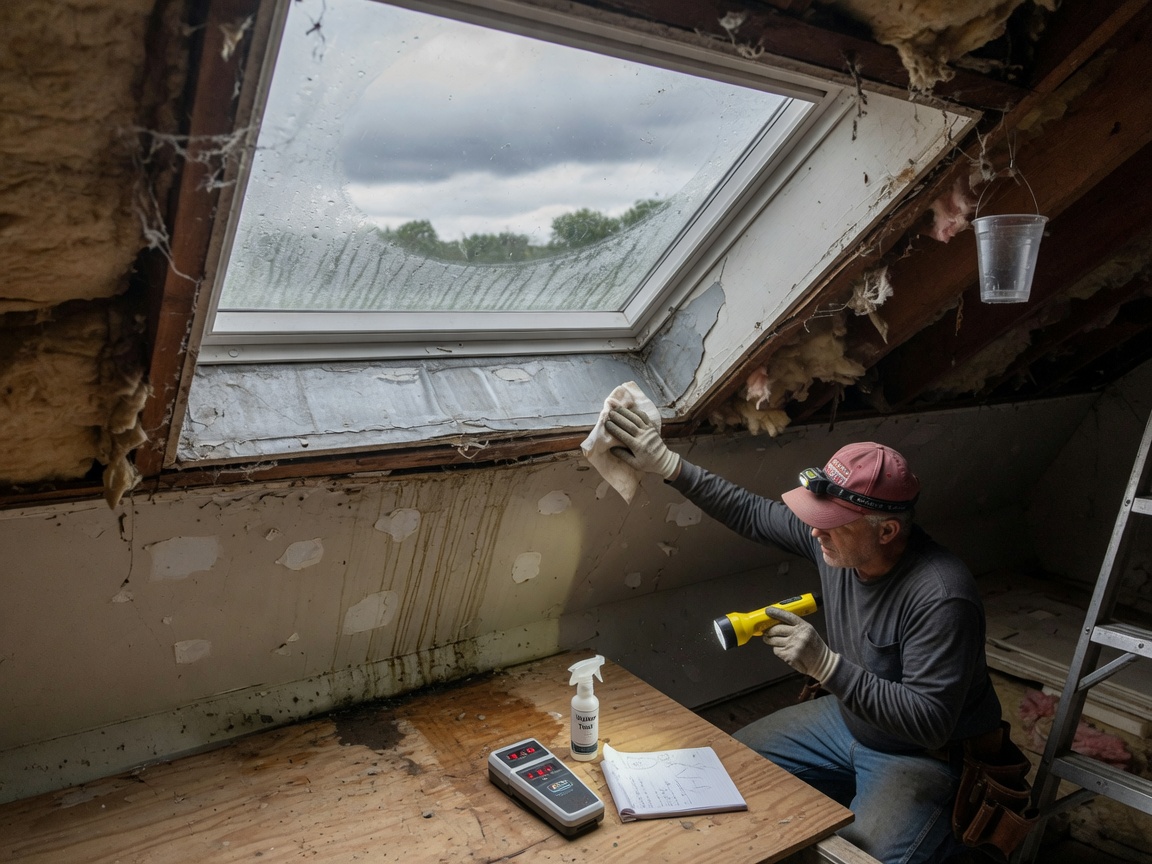
Clarksville homeowners can identify skylight leaks by starting with a visual inspection of interior ceilings and walls, then moving to the exterior frame, flashing, and seals during dry weather. This sequence catches water entry points before they worsen in the area's humid subtropical climate with hot summers and mild winters.
Checking Interior Signs First
Begin inside the home by examining ceilings directly below the skylight for water stains or discoloration. In Montgomery County homes built before 1990, especially those in Downtown Clarksville and New Providence, plaster and drywall often show brown rings or bubbling paint within weeks of a leak starting. Use a bright flashlight to inspect corners where the skylight meets the ceiling, looking for mold growth that thrives in the region's summer humidity. Next, feel for soft spots in the drywall by pressing gently with your fingertips. Check adjacent rooms on the second floor if the skylight sits above a stairwell, as water can travel along rafters before dripping. Document any findings with photos to track changes after heavy rain. Homes near the Cumberland River experience higher baseline moisture, making early interior detection critical to prevent widespread ceiling damage.
Examining the Skylight Frame and Seals
Move outside to inspect the skylight frame for gaps or degraded sealant around the glass edges. Stand on a stable ladder and look for cracked or missing caulk along the perimeter, which commonly fails after 8–12 years of exposure to Clarksville's temperature swings. Press lightly on the frame to check for movement that indicates loose fasteners. In neighborhoods like Hilldale and St. Bethlehem, older ranch-style homes often have aluminum frames that expand and contract more noticeably during hot summers. Note any condensation between glass panes, a sign of failed seals that lets humid air inside. Avoid climbing on steep roofs; instead, use binoculars for upper-level units. These checks reveal issues before water reaches the interior during the next storm.
Inspecting Flashing and Roof Integration
Examine the metal flashing where the skylight meets the roof shingles or membrane. Look for lifted edges, rust spots, or nails that have backed out, allowing water to seep underneath. In Sango and areas near Fort Campbell, mature trees drop debris that traps moisture against flashing and accelerates corrosion. Run your hand along the flashing during a dry day to feel for loose sections. Check the roof slope above the skylight for missing granules or curled shingles that direct water toward the unit. Skylight flashing repair often addresses these exact points in local homes. Compare the condition to surrounding roof areas to isolate whether the leak originates at the skylight or elsewhere.
Testing and Seasonal Considerations
After visual checks, observe the skylight during a moderate rain if safe, or simulate water flow with a garden hose aimed at the seams for 10–15 minutes while someone watches inside. Focus on corners and where flashing meets shingles. Clarksville's mild winters still bring occasional freezes that can crack seals, as detailed in related guidance on winter effects. Schedule checks twice yearly, before summer humidity peaks and after fall leaf drop. Homes in Saint Bethlehem with metal roofs require extra attention to screw seals. If issues appear, a professional skylight inspection provides targeted assessment. Track findings over time to decide on repairs versus full skylight replacement when damage extends beyond seals.